The Landscapes of the Larynx
“… I was aware that the act of speaking itself is sculpture … I also consider human thought as the first sculpture, which emerges from man …”. Joseph Beuys
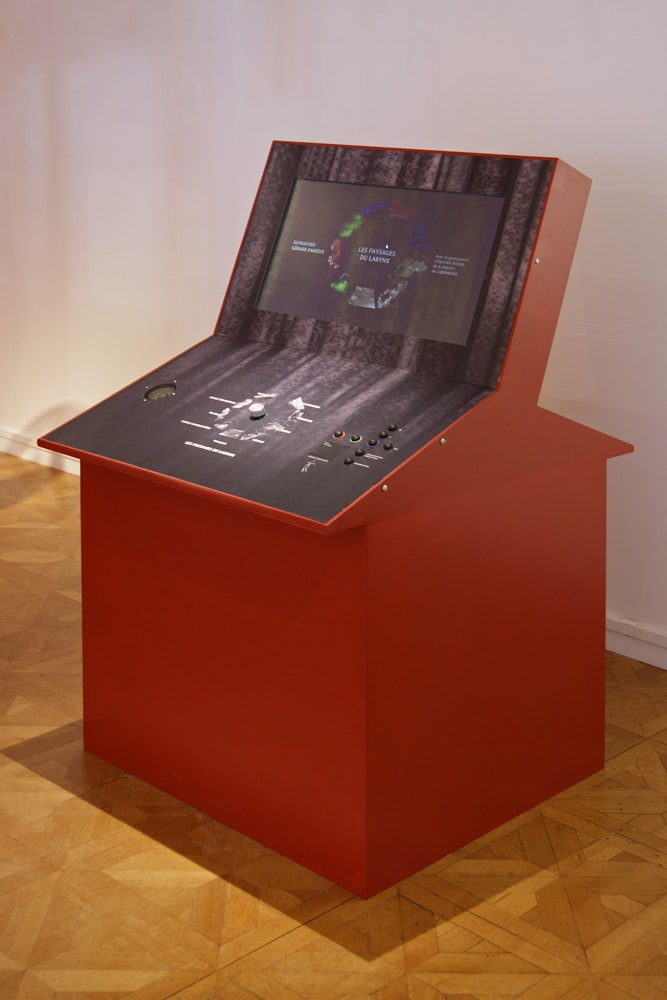
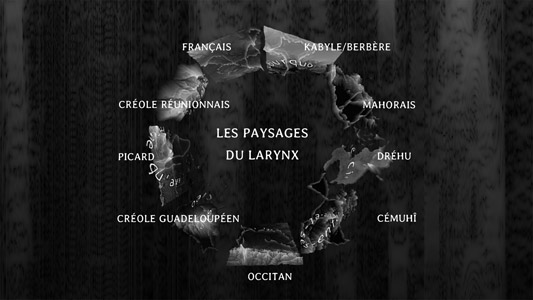
These Landscapes are the fusion of a given region’s “relief map” and the acoustic analysis (pitch and intensity of the voice) of the speaker of that region’s native language. The nine chosen languages are extracted from the corpus of speech from the languages of France: Cèmuhî, Guadeloupean Creole, Réunion Creole, Drehu, French, Kabyle/Berber, Mahorese, Occitan, and Picard.
The languages were chosen from this corpus, which is continuously fed by the research results of teams of linguists who relied on tools and methods used in the field of language sciences. Each recording was transcribed by a researcher and analyzed using sound signal processing software. The speaker’s voice was thus segmented into transcribed and translated sentences.
Is the voice a sculpture-landscape?
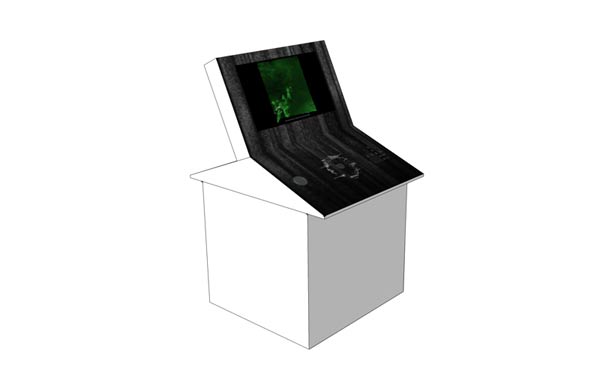
Guykayser and G Parésys answer this in their own way with a sculpture comprising an interactive device that recreates a new landscape with each visit. These are “The Landscapes of the Larynx.”
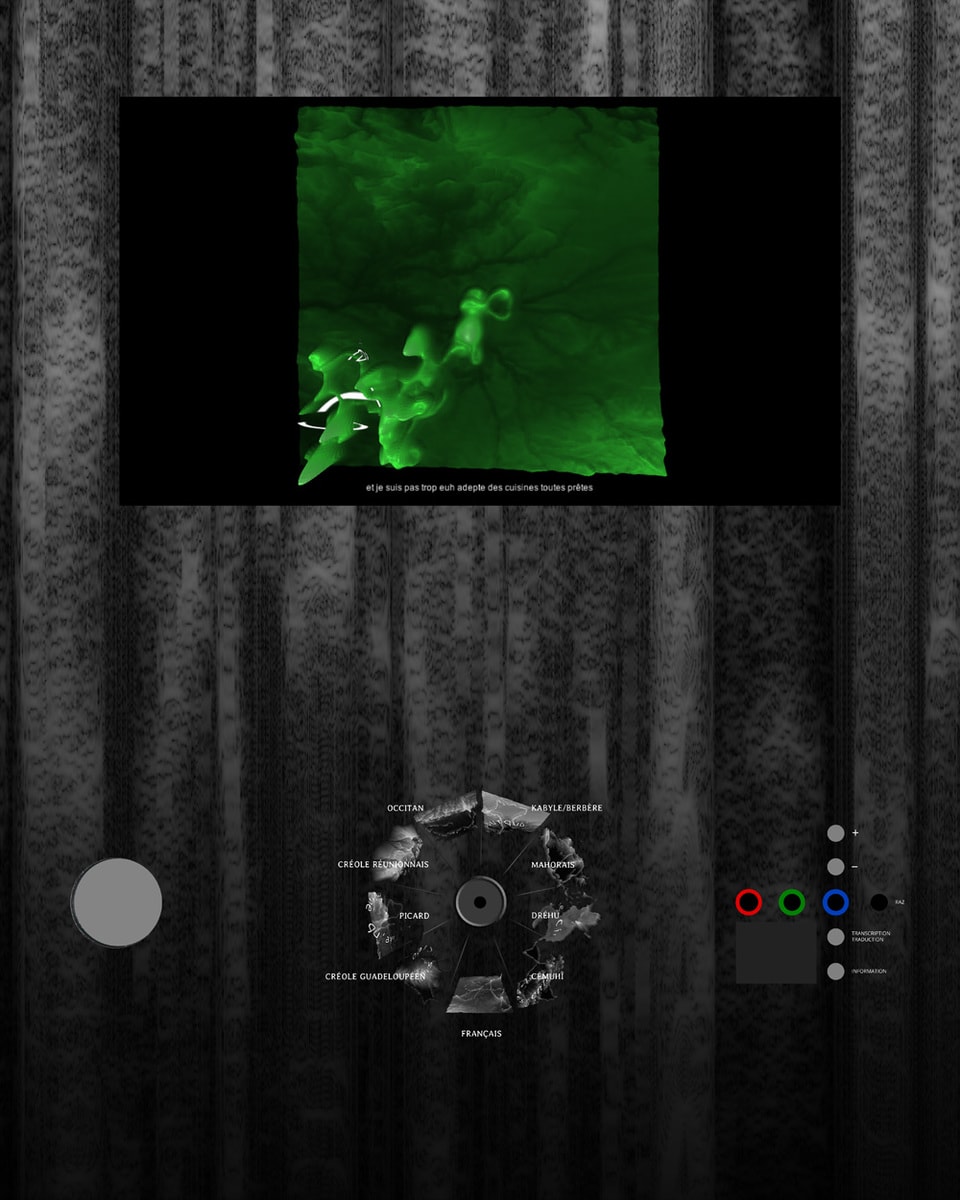
One chooses a language, a color, a size on their dashboard. The voice traverses the landscape and its movement sculpts it. The text ribbon follows the voice. Speech emerges from the shadows and the landscape changes to the rhythm of sounds, words, sentences. Mountain ranges form and dissolve. Following the path of the voice, we meander through a mineral world.
The interactive interface allows us to alternate between the transcription and translation of voices on the ribbon, to manipulate the landscape and the text ribbon in 3D, to enlarge, reduce, change color, and choose one of the nine “larynx landscapes.”
Multimedia sculpture
Materials: wood, Dibond, Arduino, loudspeaker, screen, ProcessingWe perform respectful automatic and artisanal processing of sound and textual data (with Praat and Sppas).
Thanks to DGLFLF, LLL, and Olivier Baude.

